The Forest Hills “Super-Heroes” with No Capes
Views: 234
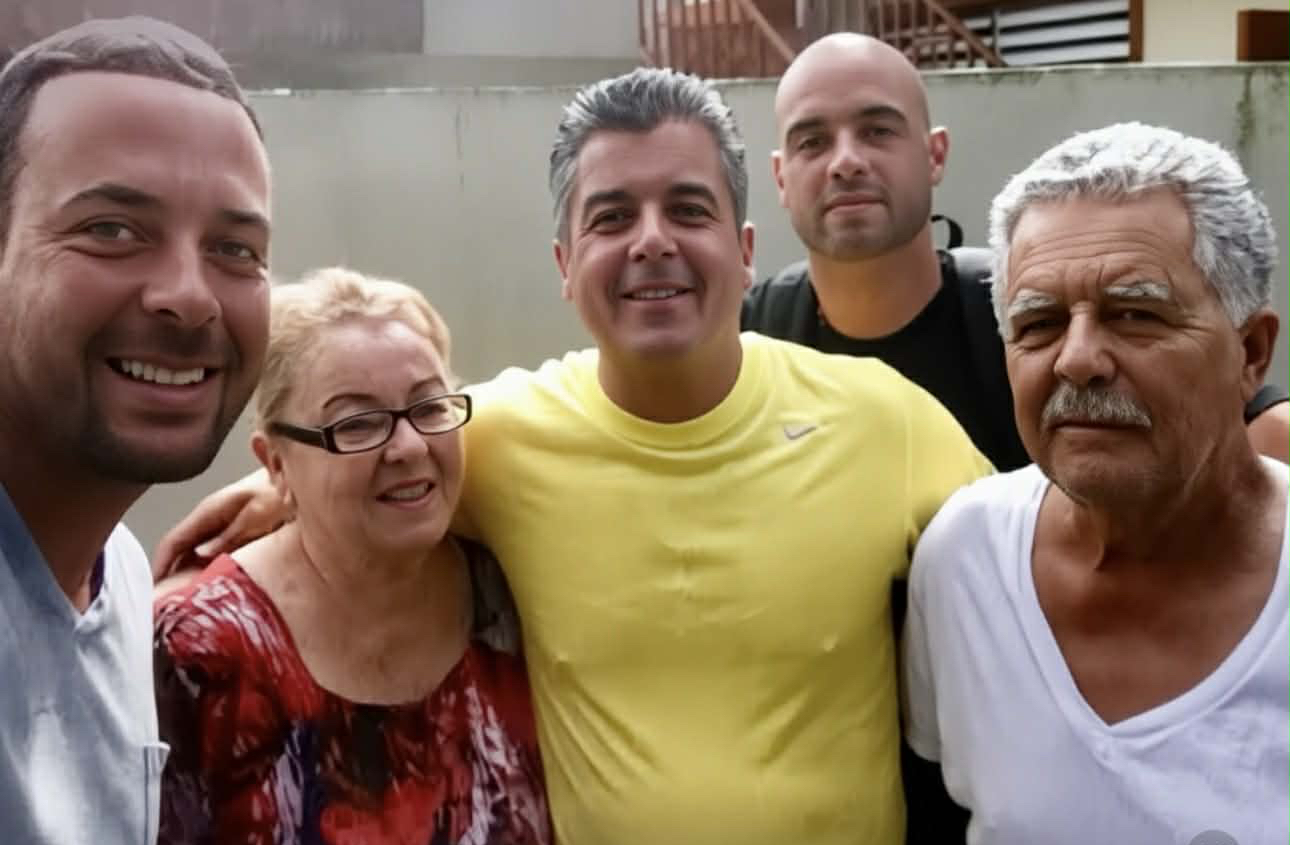
Tito Montijo, Paula Montijo, Tony Montijo, Tonio Montijo, Antonio Montijo, Sr, 2023
By Michael Perlman
A longtime Forest Hills family of supers has proven that the position entails Herculean powers, but with a history of passion, courage, and a hands-on approach, it becomes ingrained as a daily norm. Over the years, the family branched out, applying their magic touch to even Manhattan and Florida. Much transpires behind the scenes, and besides overseeing operations and exhibiting versatile skills, developing solid rapport with residents is a necessity. Today, 64-year-old author, educator, and podcaster Carmen Montijo of Rego Park is on a mission to keep her family history and their ingenuity alive, with hopes of inspiring younger generations of prospective supers.
Her family history was shaped by Forest Hills building standouts as a start. The castle-inspired Leslie Apartments bearing archways, balconies, and a cupola at 150 Greenway Terrace, overlooks Flagpole Green, and was designed by architectural firm Fellheimer & Wagner in a unique Tudor and Norman style, coupled with Art Moderne. Situated on an atypical-shaped plot, it conformed to Forest Hills Gardens standards through preservation covenants. In 1943, owner Robert M. Harriss received a first prize bronze plaque at the Queens Chamber of Commerce’s annual Building Awards Competition “for excellence in design and civic value.”
In July 1950, readers of the Long Island Star-Journal learned that the 198-family Continental Gardens, the first of five large six-story garden apartment developments, spanning 65th Avenue to 67th Road between Yellowstone Boulevard and 108th Street, was completed. This neighborly colony, a master of urban planning, was designed by Arthur Weiser and erected by Punia, Marx, and Lipstein, and also consists of Thurman Gardens, Quality Gardens, Ruskin Gardens, and Verona Gardens. Private parks with terraces were among the marketable characteristics.
The Illinois at 67-25 Clyde Street was completed in 1955 by the Lefrak Organization and designed by architect George G. Miller. This six-story 112-unit brick building was advertised for its deluxe apartments with free gas and electric, and is part of The Americana series, with other patriotic names including The Louisiana, The Indiana, The Nebraska, and The Utah.
Carmen’s 91-year old mother is Paula Montijo, and her 91-year-old father is family patriarch Antonio Montijo, Sr, “the originator,” who worked as a super for over 30 years and built a foundation as a handyman. Her parents, who are happily married for over 70 years, relocated from Queens to Cordillera, Ciales, Puerto Rico. Her father reminisced his earliest days. “You worked 24 hours at that time. There were no cell phones.” He has since retired from his position, but does not stop pursuing his ambitions. In his tool shop, he demonstrated his skills, and said, “This one is to open the water counters in the ground. The other ones are basin wrenches, used to replace faucets. These are tube cutters, and the next tools are levelers to see if a surface is perfectly horizontal or vertical. The last one is a vice grip, used if you want to hold something in place. To cut or bend it, you put it in there and tighten it up.” When asked when he awakes to begin his day, and who the boss is, he chuckled and responded, “A super doesn’t have a waking hour because he works 24 hours. The tenants are the ones who pay the rent and your salary.”
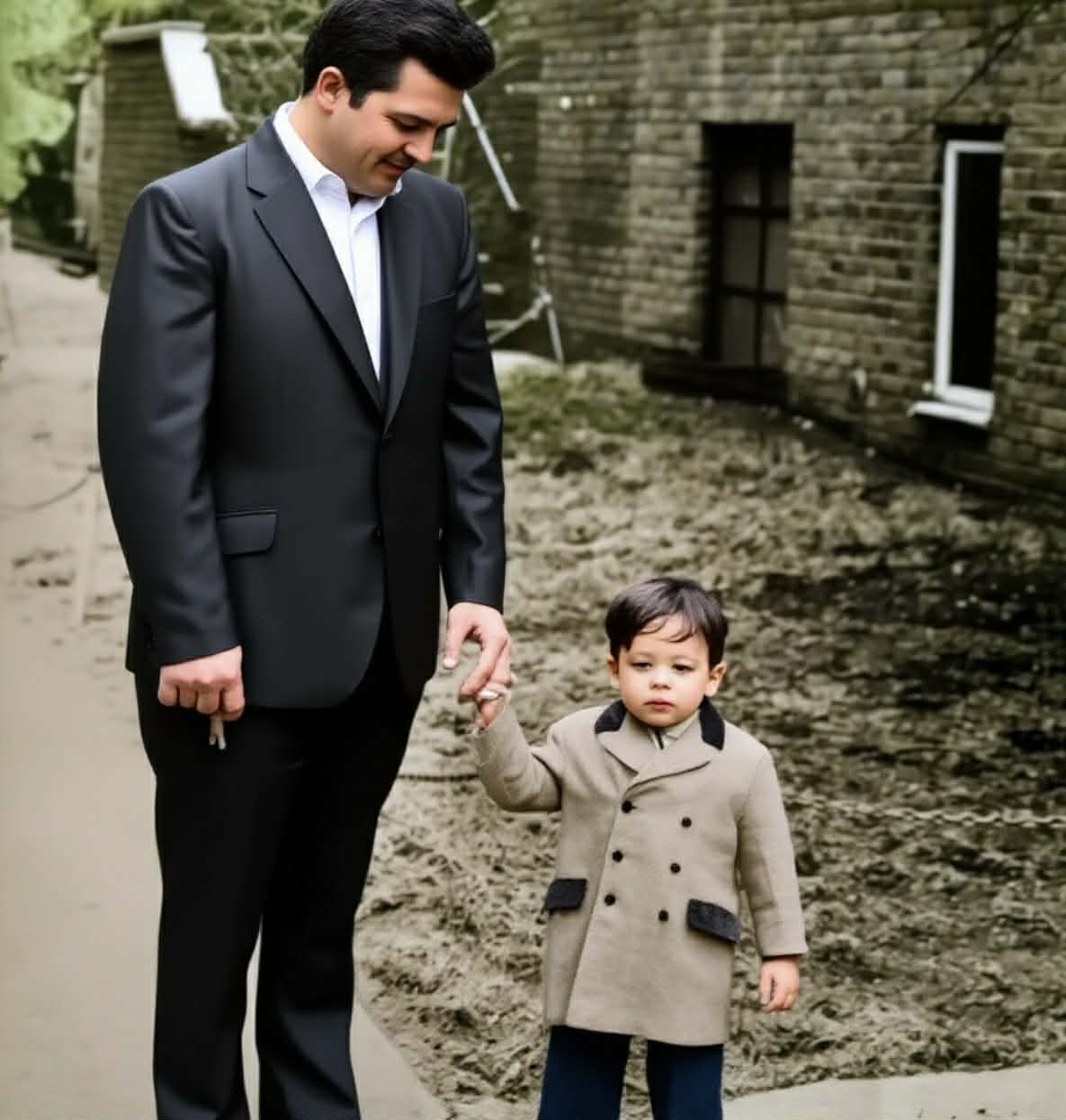
Antonio Montijo Sr with his son Tito around age 4 Continental Gardens 105 15 66th Ave circa 1976.
Antonio Montijo, Sr. would proceed proactively. “As a boss, I washed windows, and had to do everything before I sent someone to do it, so I learned how to do things. I cut grass, swept floors, and didn’t wait to be told. I would watch the mechanic work on the boilers once and learned. When there was an emergency, I would jump in and fix it, just the way I learned from the mechanic. I did it all.” He offered advice to younger generations aspiring to become a super. “Learn how to do things, since anyone can now learn faster. I didn’t have the tools you now have.” He cited shoveling snow by hand versus a modern snow blower. To eliminate the trash, he also chuckled and said, “You had to do it by hand and burn garbage in the incinerator rooms, and take tin cans filled with ashes out to be picked up by sanitation. You could not waste time. You had to work ‘real labor.’”
Carmen Montijo explained that her father spent three decades in Continental Gardens at 105-10 66th Avenue, paving the way for a family and their positions. “My father raised six children with my mother, the devoted housewife who stood beside him through every season. He began as a porter with a small apartment and a big dream; just a young man starting his family and doing the best he could. His work ethic spoke louder than words. The building manager saw something special in him, as in steady and rare, and gave him a chance. With that came a larger apartment to grow our family, and a promotion to handyman; the job that changed everything. He rose up because he showed up, worked hard, and never complained.”
Carmen praises her father as the kind of super who would lean out of windows to replace broken panes at a time when it was not a common practice to wear a harness. “He ran five boiler rooms across the Continental Gardens complex. There was no technology, but just a man, his toolbox, and a community that came knocking at all hours. His reputation and unmatched work ethic made him a man the industry could never forget. Even in retirement, New York still needed him, so he returned,” she reminisced. Then he became a super at Yellowstone Gardens at 102-36 64th Avenue and 102-35 64th Road, erected in 1949.
A couple years later, he managed the prestigious Leslie Apartments. She continued, “My father hired my uncles and family friends, always granting people opportunities. When he retired again in 1980, he fulfilled what symbolized the very heart of our family by passing the building onto my older brother, Tony, launching another cycle of the Montijo legacy.” Besides cultivating his skills beyond retirement, he takes pride in writing lyrics for traditional Spanish rhythms.
Marcos Fernández, who is 65, is Carmen’s former husband, who exhibits an unwavering sense of responsibility with a home life reflecting love and sacrifice. “He learned the craft from the ground up,” she said. He was once an auxiliary police officer at the 112th Precinct. His super career originated as a porter at the 96-unit seven-story building at 75-05 113th Street, erected in 1951. That was followed by The Leslie, and then The Illinois, a co-op, where he proudly serves residents for 38 years. “From daily repairs to major upgrades, and from gardening to managing two porters, Marcos runs the building with a 24/7 commitment,” explained Carmen. This is also where they raised two daughters. Tenants may be unaware that he is a spiffy disco dancer, which includes The Hustle.
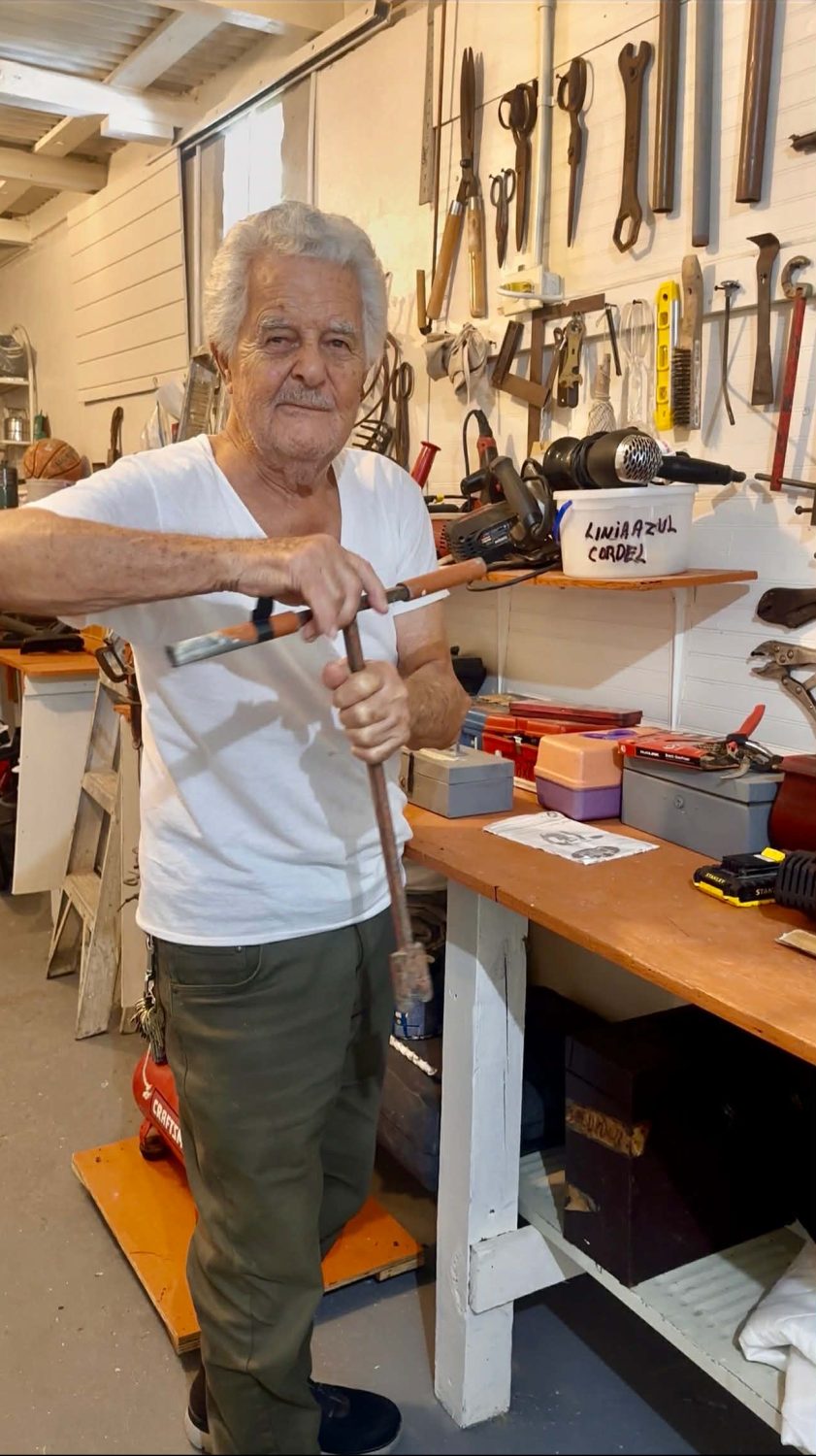
Patriarch Antonio Montijo Sr in his shop in Puerto Rico 2026 photo by daughter Carmen Montijo.
“Sam Lefrak named buildings after states. In the 1950s, after soldiers returned from the war, there was a big building boom of six-story brick buildings. Above The Illinois’ service entrance, I still have the old fallout shelter sign. In the basement, there are rooms with supplies from the 1950s,” explained Marcos. In recent years, the building was upgraded, which he attributes to a younger board investing in its future. Features include a UPS service center, a play area, and a contemporary lobby. “Apartments don’t stay on the market long. When I began, there were many seniors and practically no kids. Many younger families are moving in. We still have tenants from the 1970s. We were a rental, and you would only take direction from the management. We are now a co-op, but you have that personal interaction with co-op members, since they live where you live. Sometimes people invest their life savings to live here, which is one of the reasons we take care of this great building.”
Marcos’ role model is especially his father, Gerard Fernández, Sr, who passed away in a car accident when he was 9. “My father was a Korean War veteran. He had a butcher shop, Puerto Rico Meat Market on 101st Street and Columbus Avenue. To this day, I feel that I have him in me, and it helped me go through life,” said Marcos, who will always cherish his family values and solid work ethic. Later this year, he plans to retire. “I served my community as a super and a guardian,” he proudly stated.
Tony Montijo, who is 66, is Carmen’s brother. She explained, “Tony began as a super at 75-05 113th Street, quickly proving himself, and became a handyman at Continental Gardens shortly after. When his father retired, Tony stepped into the role, honoring the path before him, and that is where he raised three children, continuing the family’s connection to the complex that shaped generations.” He then became the super at The Leslie, followed by operating high-end Manhattan residences at 88th Street and 2nd Avenue and The Envoy at 300 East 46th Street for an approximate 25-year period. Most residents are unaware that he is a three-time marathon competitor.
The public may not realize the extent of responsibilities of a super. “We are the main guys. If we don’t make things happen, we’re going to be out first. We’re always on our game,” said Tony. Then Marcos chuckled and said, “So it’s not about the free rent.” Tony continued, “If you don’t see tenants for a few days, who notices it… us superintendents. You end up knocking on the door or getting the doorman to ring. We actually have to go in to find people in distress on the floor. We offer to call an ambulance. I get calls in the middle of the night. In Midtown, there was a kitchen fire. I got the fire hose in the stairway and was able to put it out. Then the firemen came. That’s not my job, but common sense is to keep everything in order.”
They offered advice to younger generations. Tony said, “If you won’t be very responsible, don’t try to take the job, since you won’t last long.” Marcos continued, “Know how to communicate. Treat every tenant the same, whether they respect you or not. Keep an open mind, since you will be a counselor, a babysitter, and the police of your building. You will wear all those hats.”
After retirement, Tony’s son Tonio Montijo, who is Carmen’s 44-year-old godson and nephew, carried the torch and discovered the essentials of the building service industry through his father. He worked part-time as a relief doorman at The Leslie, and is now a super at The Envoy. “In many ways, Tonio is the unofficial mayor of Forest Hills. He attended local schools, built friendships spanning decades, and knows countless residents and business owners,” said Carmen. He is now raising two children and is a songwriter.
Tonio shared how his story began. He owes gratitude to family members, including all old-school men and women; great-grandparents, grandparents, and parents. “From being the youngest, I watched how they would raise their families, and observed all seasons and holidays, and the ups and downs. You don’t understand it as a kid, but as you get older, you start watching all of whom are in your family circle, and you learn from all. It is important to speak less and listen more. Do things you don’t want to do and keep growing as a person.”
Tonio explained the career’s unpredictable nature. “There are domestic disputes, emergency phone calls at 2 AM, and personal issues that people get you involved with, and you play it diplomatically. You’re going down to your office to pick up a paper, and it turns out to be a two-hour thing. There’s deliverymen, contractors, or movers who are doing what they shouldn’t. There’s always something going on.” He pointed out hard-to-find supplies. “This whole week, I have been looking for spindles for the bathroom, since they don’t make some anymore. I must have called five places, and I’m speaking to my father, Marcus, and Tito,” he said.
The holiday season is the usual time to recognize the super and the staff members, which boosts one’s morale. “I told my wife that I never received so many cards in a short period. Everyone is writing ‘We appreciate you for this,’ but I am also telling them that it’s my job and to save your money. My daughter is 3 and my son is 7 months, so these experiences are bringing much positive energy.” He has much to be grateful for, including a routine learning experience. He explained various bonds with residents. “You see people who are lonely, and you don’t get into it personally, but give them a few words to keep them going. At 99, my oldest tenant still goes to the supermarket and cooks. Every time you see her, there is something to take in. She says, ‘When you are my age, you don’t have your family or longtime friends anymore, and I don’t know how long I’ll have.’ I’m thinking about the smallest headaches, but this shines light to take life in a different perspective.”
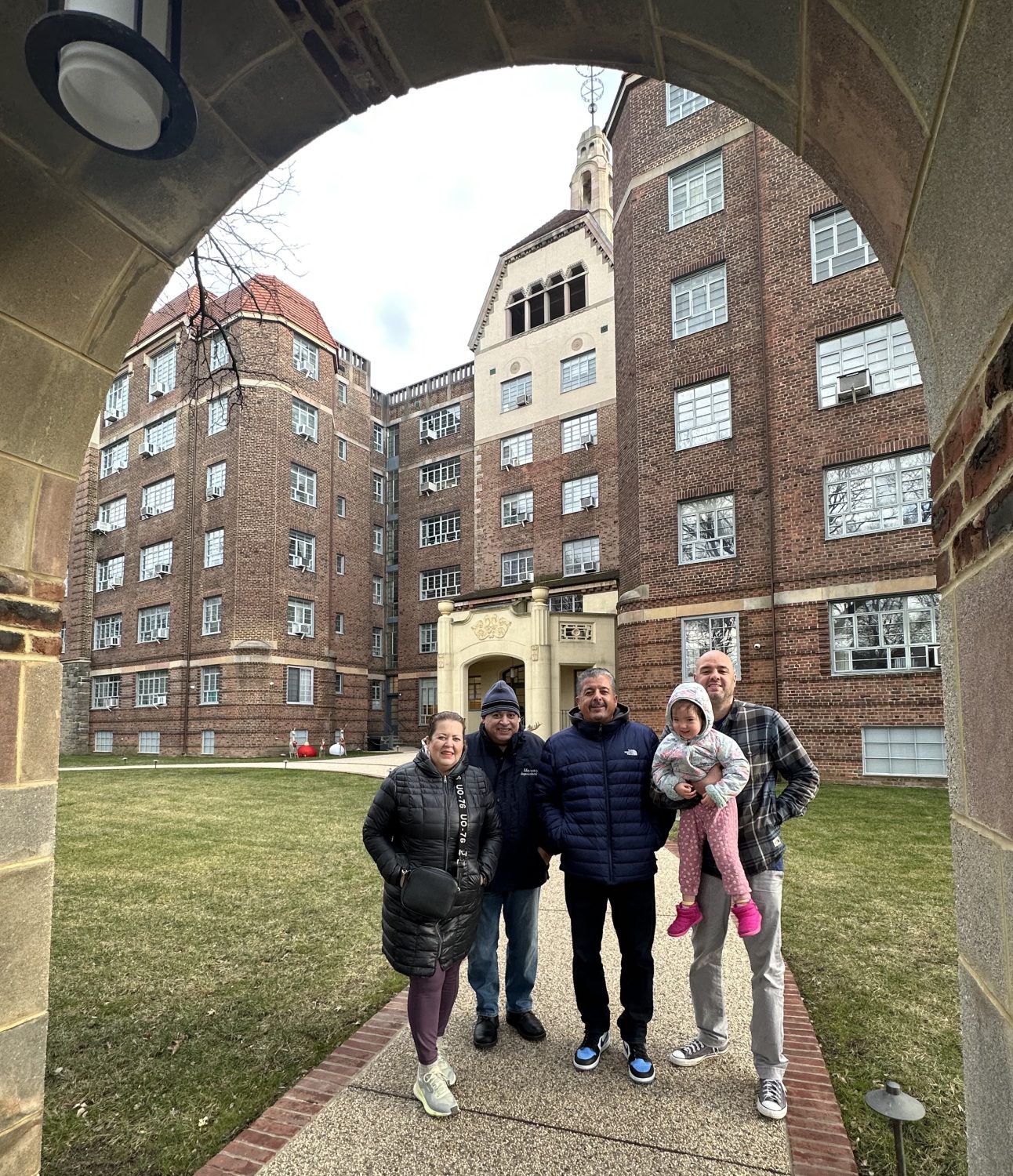
Carmen Montijo Marcos Fernandez Tony Montijo Tonio Montijo holding Skylar at The Leslie Photo by Michael Perlman
Tito Montijo, who is 54, is Carmen’s youngest brother. “Tito grew up learning from his father and brothers; masters of their craft. He may be the youngest, but every bit a leader,” said Carmen. His career originated as a porter in Queens. His second chapter began in Florida with his wife and children. He was employed by a mom & pop style company specializing in furniture, windows, and door installation, which strengthened his craftsmanship abilities. “Then came the call that would change everything. A close friend and super who knew Tito’s history and potential, offered him an opportunity. Today, Tito is a high-end super at an oceanfront luxury condo in a golf community on the northeast coast of Florida. His story is proof that legacy, skill, and heart can take you anywhere,” she continued. When he is not applying elbow grease, DJ “El Favorito” is spinning vinyl and playing bongos and timbales.
When asked about role models, Tito responded, “You learn everything from your dad, ‘the king.’ Along with him, all the older guys in the family from uncle Frankie to grandfather Jesus. There are so many old-school men from that era that were great role models, in addition to my brother who is 12 years older. I lived through his eyes and learned what’s a pro and con. I always admire his tenacity, hard work, and how he’s a respectful man.” He revealed that he did not plan to pursue this path, but it was in his DNA. He also commended his encounters in Florida in the name of morals, and considers himself a man of tradition.
Referencing responsibility, Tito explained, “Any super that is proud of his job and does it well, doesn’t want to be told by a resident if something is out of place, broken, and needs to be repaired. It’s our job behind the scenes to notice before anyone notices them. We want to see the light bulbs that are out. Behind the scenes, you wake up, report to duty, and you’re looking for stuff. If you’re not a proud person, it reflects upon you. A committee will then make a big list, since you’re being paid a salary, but not doing it. Behind the scenes is from the moment you awake until you leave, but sometimes you can’t leave a situation undone.”