Planting Roots & Branching Out For Over Three Decades
Views: 0
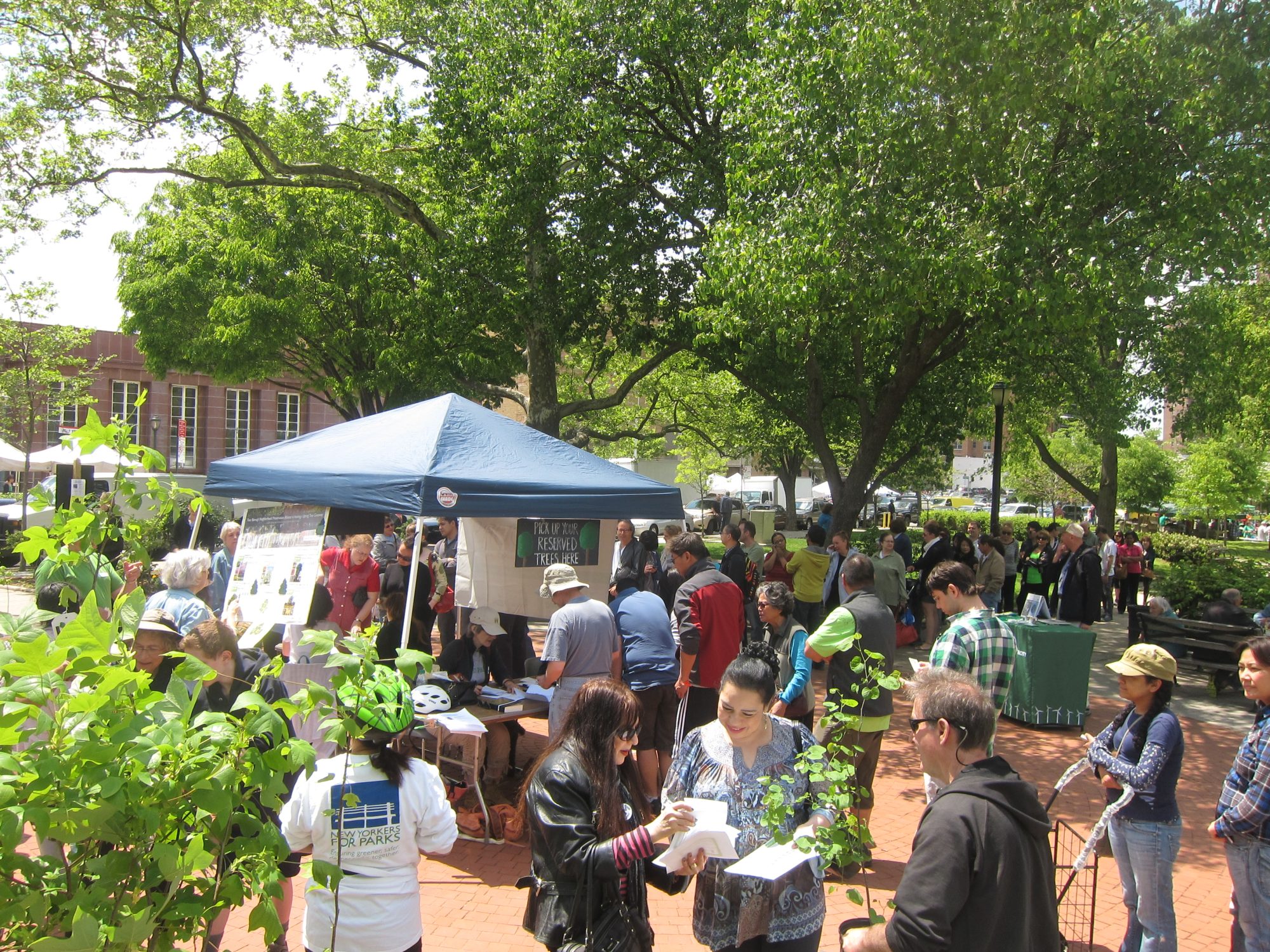
Forest Hills Tree Giveaway. Photo by coordinator Michael Perlman, MacDonald Park, May 2014.
BY MICHAEL PERLMAN
CHAIRMAN, REGO-FOREST PRESERVATION COUNCIL
mperlman@queensledger.com
The five boroughs offer a greener and more colorful natural skyline, as young diverse tree species are planted and foreshadowed in the path of mature trees during the spring and fall planting seasons. This boosts the potential for beauty, wildlife and pollinators, property values, eliminating pollutants, providing oxygen and shade, addressing runoff, absorbing stormwater, harboring community and meteorological history, and fostering spiritual energy and creative achievements.
In the center of it all is New York Restoration Project (NYRP), which was founded in 1995 by legendary singer, actress, and environmental hero Better Midler. This dynamic citywide nonprofit, which tirelessly plants roots for future generations in partnership with passionate multigenerational and ethnically diverse New Yorkers, is acclaimed for its role in environmental justice and nature conservancy by preserving community gardens among green spaces. The organization is also highly recognized for its partnerships by coordinating citywide spring tree giveaway events and participating in MillionTreesNYC, which was established in 2007.
As a case in point, from 2011 through 2015, this columnist as a member of the Four Borough Neighborhood Preservation Alliance, introduced the Forest Hills Tree Giveaway event in historic MacDonald Park in conjunction with NYRP, and recruited volunteers to donate an estimated 1,225 trees. They were presented with tree certificates, and named after landmarks, notables, and historic street names by former resident Steve Goodman, to encourage greater civic pride and tree stewardship.
Step behind the scenes to discover the story behind NYRP’s exemplary leader, Public Programming Manager Michael Horwitz. Through his role as of March 2022, he has been improving the character of the five boroughs, and impacting the lives of New Yorkers and wildlife. Community groups and tree adopters among environmental stewards at other events are likely to have met him. “Especially in an urban environment, trees do not just happen by accident. Their presence reflects people making deliberate choices to invest in the long-term health and livability of a community. Trees rely on stewardship and advocacy, so when I see them thriving in a city, it represents people’s care and good public policy,” explained Horwitz.
Furthermore, trees symbolize continuity across generations. He continued, “They connect us to the people who planted and cared for them decades ago, and they remind us that we’re part of a much longer story. Trees have existed long before us, and will hopefully continue long after us. There’s something very grounding and reassuring about that sense of permanence and connection to the past.”
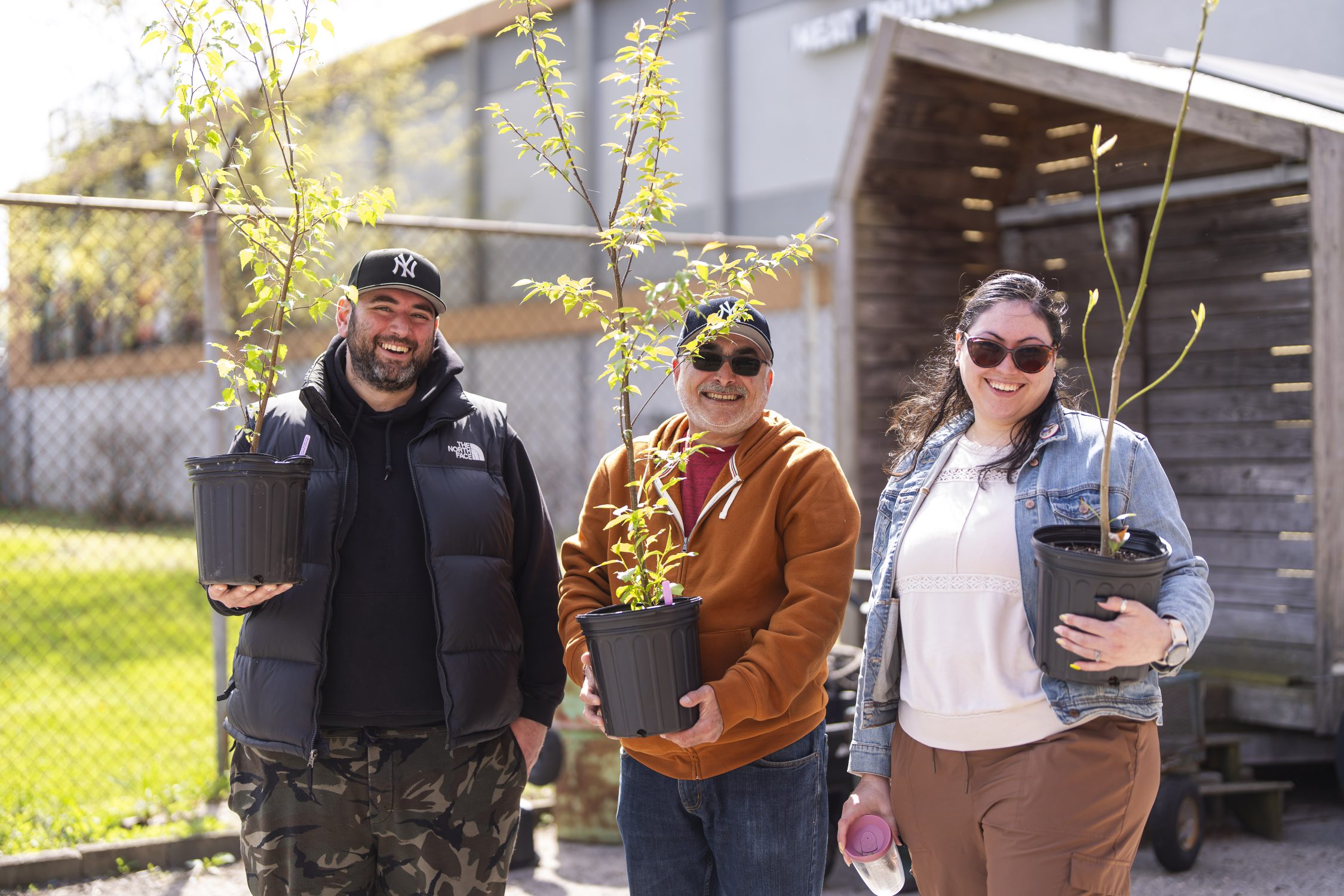
Courtesy of Ben Hider & NYRP.
This spring, NYRP hosted 27 tree giveaway events citywide, which totals 3,750 new trees donated to property owners, building supers, boards, and residents between April 4 and May 16. Amazingly, an approximate 600 tree giveaways have been coordinated since NYRP’s founding. This season’s offerings included Allegheny Serviceberry, American Hazelnut, American Persimmon, Arrowwood, Basswood, Beach Plum, Black Cherry, Black Gum, Eastern Redbud, Elderberry, Flowering Dogwood, Grey Birch, Highbush Blueberry, Northern Bayberry, Pagoda Dogwood, Pawpaw, Red Chokecherry, Sweetbay Magnolia, Sweet Birch, Virginia Sweetspire, White Fringetree, and Witchhazel.
The scale and reach of NYRP’s tree giveaway program that spans The Big Apple can be deemed a modern marvel. To date, NYRP distributed trees across 96 percent of the city’s zip codes. Horwitz explained, “This means the impact of the program is woven into neighborhoods all across the five boroughs, and most New Yorkers have likely encountered an NYRP tree at some point in their daily lives, whether they realize it or not. The program’s impact is visible citywide, and I think that speaks to how deeply urban forestry can shape the everyday experience of living in New York.”
Volunteers play an essential role in restoring natural beauty, as NYRP is open to partnerships. As the trees are bare in the winter, blooming opportunities are already underway through organizational and public teamwork, as local organizations are invited to apply to host a tree giveaway for the upcoming spring season. “Our team reviews applications and identifies partners that will maximize the program’s impact and accessibility within their communities. A main focus is advancing environmental equity, so we also prioritize working in communities that historically had lower tree canopy coverage and fewer environmental resources, including many low-income communities and those of color across NYC,” explained Horwitz.
The selection of trees for the tree giveaway program in its entirety and for individual partners, NYRP aims to balance various considerations, which encompass aesthetics, environmental performance, and ecological value. “Different species provide different benefits, so diversity is an important part of building a healthy and resilient urban forest,” said Horwitz. “Ultimately, the goal is to select trees that will not only thrive over time, but also enhance the beauty, ecological health, and livability of the neighborhood for years to come.”
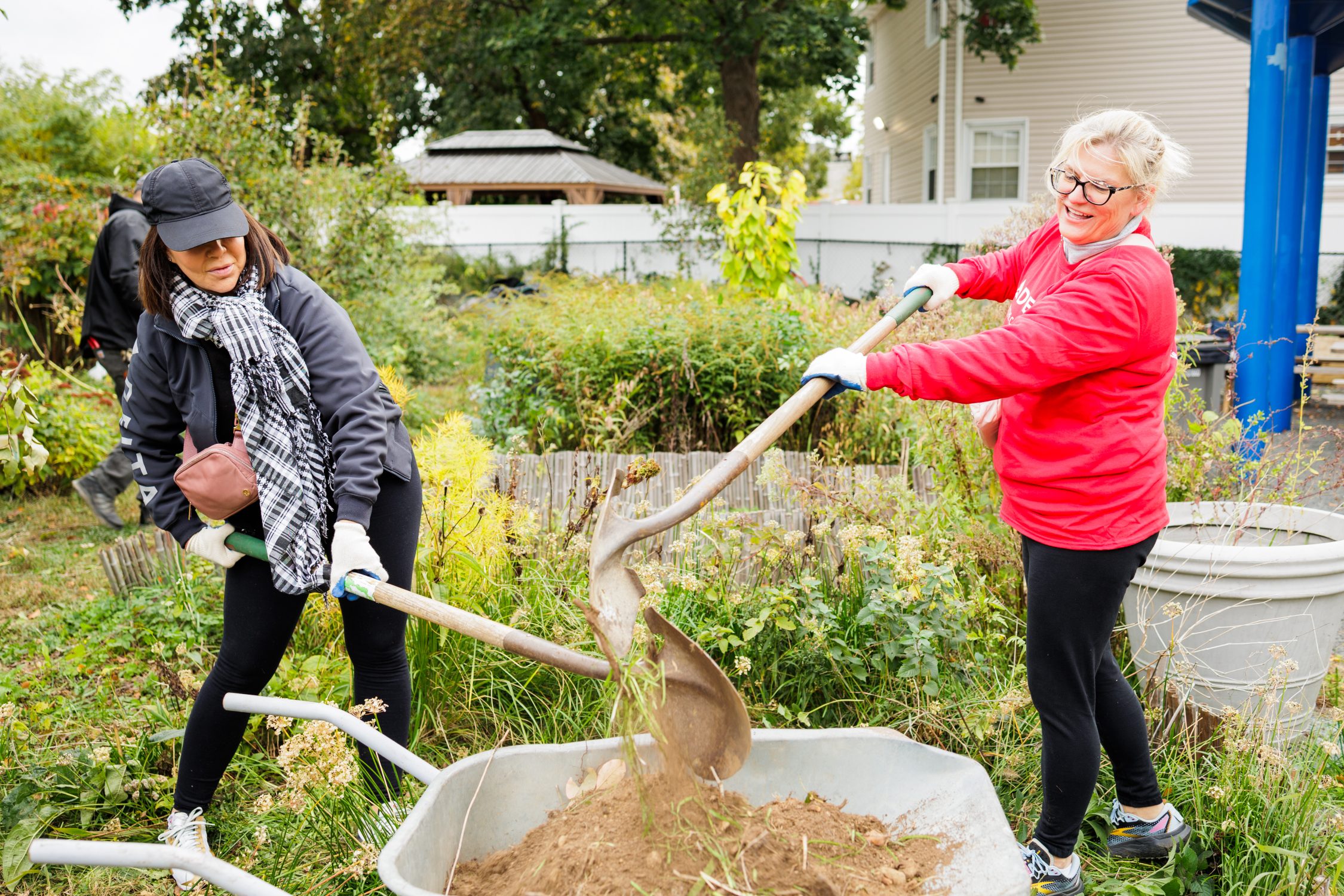
50 Cent Community Garden, Jamaica, Courtesy of NYRP.
NYRP also restores much faith in humanity through collaborative initiatives, where staff members are an example of a people’s person. He explained, “It is incredibly meaningful to reconnect with people who have participated in past giveaways, and hear how much they have enjoyed and cared for their trees. Sometimes we even get to see those trees thriving years later, which especially gratifying. It is personally rewarding and important for the program to build long-term, lasting partnerships. Relationships like these allow NYRP to stay connected with partners and tree recipients over time, hear how the trees are doing, and better understand the impact that trees are having in the community. Feedback helps inform and strengthen the way we run the program.”
It is intriguing to discover how Horwitz’s passion for nature was shaped, and how his expertise through NYRP becomes an enriching aspect of the city’s fabric. For nearly his entire life, he has taken pride in calling New York City and its surrounding suburbs home. “That shaped my appreciation for urban environments and my connection to nature. When many people think of New York City, they picture concrete and density first, but the city is also home to an incredible amount of green space, biodiversity, and natural beauty. Growing up, I have always valued those spaces and understood how important they are to people’s quality of life,” said Horwitz.
Working with NYRP transformed the way he experiences the city. “Since joining, I have probably seen more of New York than I had in the previous decades of my life. Every neighborhood has its own character, history, and strengths, but what connects them is that people everywhere want healthy, welcoming, and well-maintained environments. Supporting that, no matter where it is in the city, feels deeply meaningful to me,” he said.
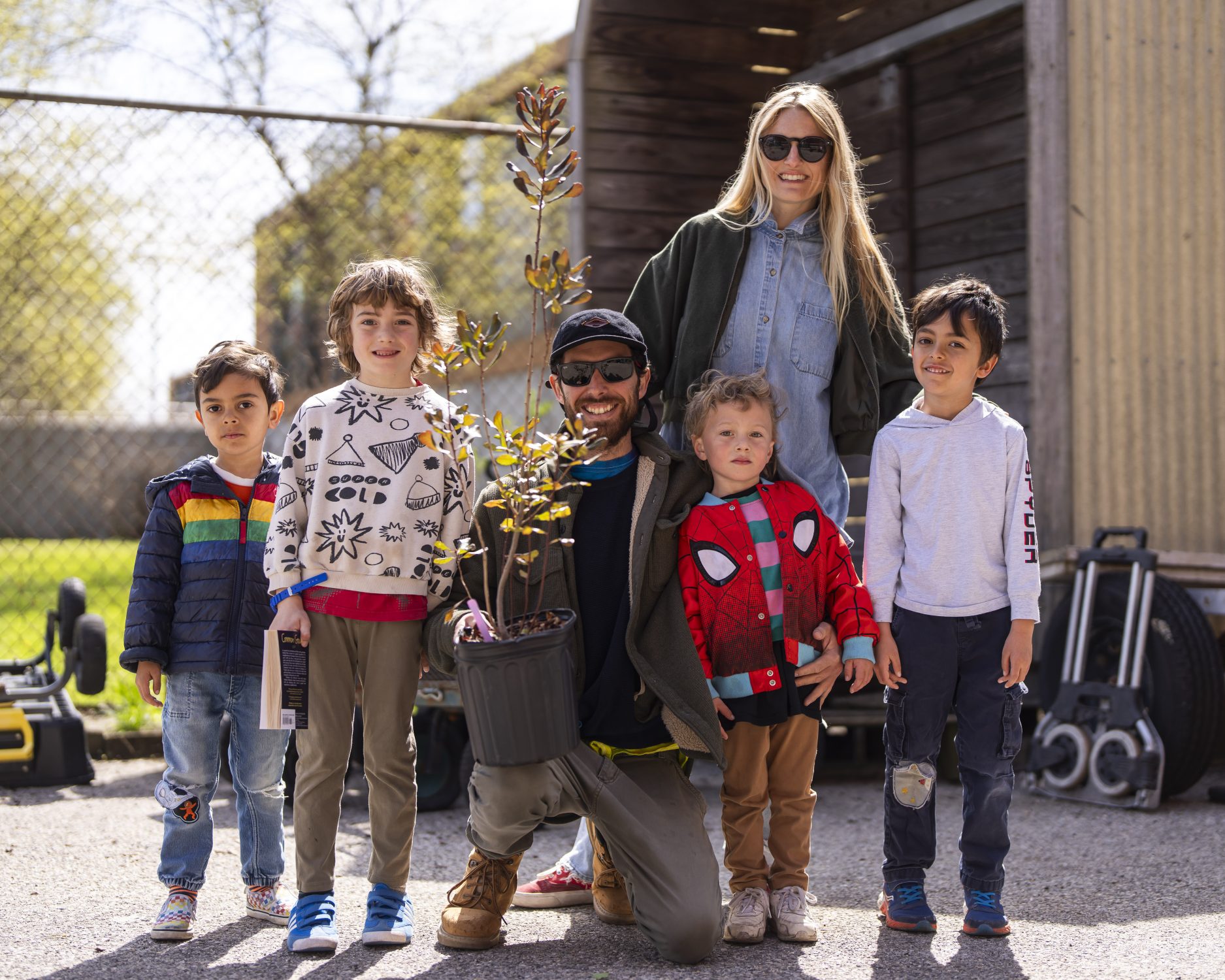
Bonding over trees at RISE Rockaway Tree Giveaway, Courtesy of NYRP.
New Yorkers may wonder which tree species NYRP will acquire and distribute in the future, which may not have been offered through the program or planted for decades around the boroughs. Every year, NYRP evaluates the tree species that have been distributed, and closely examines how communities have responded. Horwitz explained, “Public interest is an important consideration, since when people are excited about a tree and choose a species they genuinely want in their homes or neighborhoods, they are more likely to care for it successfully in the long-term. Ultimately, the goal of the program is to help expand and sustain New York City’s urban canopy, and that depends on trees surviving and thriving after they are planted.”
Simultaneously, thinking ahead is part of the equation. “As the climate continues to change, we are increasingly focused on selecting species that will be resilient in New York City’s future environmental conditions, and not just species that have historically performed well here. That means considering factors such as heat tolerance, storm resilience, drought conditions, and long-term ecological adaptability,” said Horwitz.
According to an executive summary prepared by New York City Comptroller Mark Levine’s office, the city’s urban forest consists of greater than 7,000,000 trees spanning streets, parks, and private land. Much success has been achieved by expanding the tree canopy over the past two decades citywide, and as of 2021, that constitutes 23.4 percent of coverage, according to The Nature Conservancy. Furthermore, Local Law 148 of 2023 established the framework for a comprehensive Urban Forest Plan, setting a goal of achieving a 30 percent canopy coverage by 2030.
By following NYRP’s free event calendar and volunteering or attending another interactive event, New Yorkers can feel as if they are taken on a citywide adventure on nearly any day of the week: www.nyrp.org/en/calendar. Besides tree giveaways, events could entail sensory playtime, composting, meditation and a tea ceremony, a butterfly workshop, a spring concert at a community garden, volunteering to beautify a park or a teaching garden, and participating in the Urban Agriculture program. The public can feel free to extend outreach year-round and visit www.nyrp.org/en/get-involved